
What You’ll Learn
- Scanning Child Sites for known WordPress core, plugin, and theme vulnerabilities
- Scheduling automated vulnerability checks
- Using MainWP NVD API vs WPScan Vulnerability Database
- Acting on vulnerability scan results
Integration Add-on - This add-on connects MainWP Dashboard to the MainWP NVD API or WPScan Vulnerability Database API. No third-party WordPress plugin is required.
- Get email notifications after scheduled vulnerability checks.
- Update vulnerable plugins and themes when a fixed version is available.
- Delete vulnerable plugins and themes.
WPScan Vulnerability Database
The WPScan Vulnerability Database is an online browsable version of WPScan’s data files that are used to detect known WordPress core, plugin, and theme vulnerabilities. This database has been compiled by the WPScan Team and various other contributors since WPScan’s release. The development of the WPScan Vulnerability Database was funded by BruCON’s 5by5 project. To use this service, register with WPScan and enter the API token from your profile in the add-on settings. WPScan offers a free tier with a limit of 25 API requests per day, and paid API access increases the daily request limit.MainWP NVD Database
This API is free and does not require a WPScan API token. The NVD is the U.S. government repository of standards-based vulnerability management data represented using the Security Content Automation Protocol (SCAP). This data enables the automation of vulnerability management, security measurement, and compliance. The NVD includes databases of security checklist references, security-related software flaws, misconfigurations, product names, and impact metrics.Check Your Sites for Vulnerabilities
1
Login to your MainWP Dashboard
2
Go to MainWP > Add-ons > Security > Vulnerability Checker
3
Go to the Overview tab
4
Click the Check all sites button
Click the Check all sites button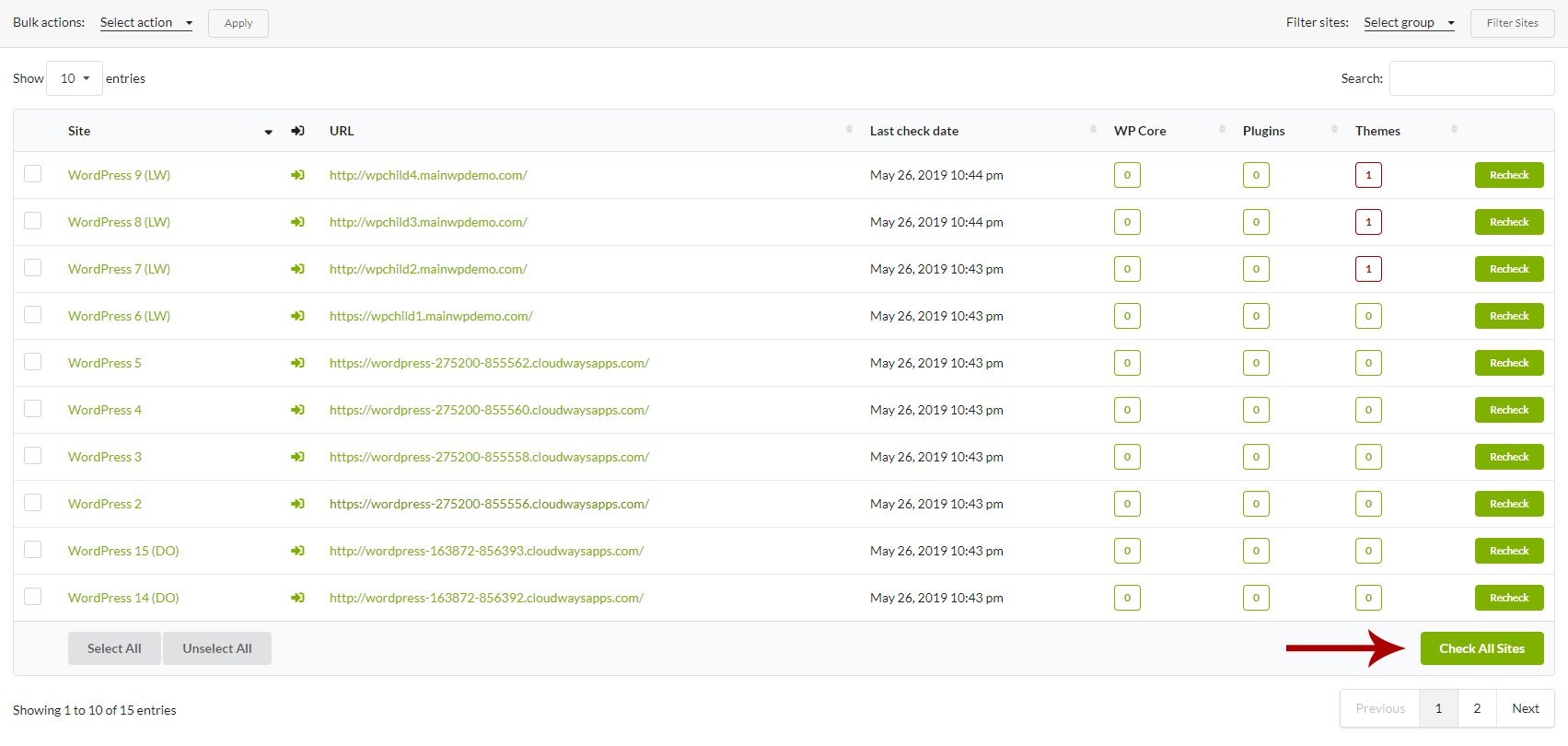
Schedule Automatic Checks
If you want the add-on to perform automated checks,1
Login to your MainWP Dashboard
2
Go to MainWP > Add-ons > Security > Vulnerability Checker
3
Go to the Settings tab
4
Set the automatic-check schedule
Under Schedule automatic checks, select Daily, Weekly, or Monthly.
5
Enable email notifications (optional)
Enable Send email notifications if you want to receive the results by email.
6
Save Settings
/wp-admin/admin.php?page=SettingsEmail). If the Daily Digest recipient settings have not been saved, MainWP uses the WordPress Administration Email Address as the default recipient.
If you want to make sure that WP Cron jobs are regularly triggered on your MainWP Dashboard, you can Authorize the Uptime Robot service and add your dashboard site as a monitor. The Uptime Robot will ping your dashboard site regularly and make sure that all scheduled events are occurring.
Include the Scan Process in the Sync Process
If you want the Vulnerability Checker Extension to check your sites every time you Sync your sites,1
Login to your MainWP Dashboard
2
Go to MainWP > Add-ons > Security > Vulnerability Checker
3
Go to the Settings tab
4
Locate the Check sites when syncing option
5
Enable the option
6
Save Settings
MainWP NVD API
The MainWP NVD API uses the NVD API to find potential vulnerabilities on your Child Sites and is available for all users.MainWP NVD API requires MainWP Dashboard and MainWP Child 4.1.7 or higher.
The NVD is the U.S. government repository of standards-based vulnerability management data represented using the Security Content Automation Protocol (SCAP). This data enables the automation of vulnerability management, security measurement, and compliance. The NVD includes databases of security checklist references, security-related software flaws, misconfigurations, product names, and impact metrics.This API is free and does not require a WPScan API token. To enable the MainWP NVD API,
1
Go to MainWP > Add-ons > Security > Vulnerability Checker > Settings
2
Find Select service and select MainWP NVD API
3
Save Settings
1
Go to MainWP > Add-ons > Security > Vulnerability Checker > Overview
2
Click the Check All Sites button
Database health check
The Vulnerability Checker Extension reports its table and expected columns to the MainWP Dashboard database schema checks. This table stores each Child Site’s WordPress core, plugin, and theme vulnerability counts, the last check time, and the latest scan results. With MainWP Dashboard 6.2 or later and the Extension active, open MainWP > Info > Server and review the Database section. Search formainwp_vulnerability_checker to find the table and check for a missing table, missing columns, or incorrect column definitions.
Run this check when scan results or vulnerability counts fail to save or load, or when MainWP Support asks for a system report. See Database Health Check for how to read the results and prepare a support report. These checks only report the Dashboard database structure. They do not repair the table, restore scan results, or check Child Site databases.
Related Resources
- Security Add-ons - Browse all security tools
- Managing Plugins with MainWP - Plugin management guide
- How Secure is MainWP - Security architecture overview